Commercial Roof Replacement in Los Angeles, CA
Commercial roof replacement means removing the worn roof, fixing damaged deck areas and installing a new roof system. The job usually includes new flashing where the roof meets walls, edges, curbs and pipes. We replace low-slope and pitched roofs on existing commercial buildings across Los Angeles.
Call (424) 842-2249 to request a free estimate, or use the form. Before you compare prices, check that every proposal covers the same work. A clear written scope spells out everything from tear-off to warranty terms.
Deciding Between Roof Repair and Replacement
Consider replacement when leaks keep coming back, repairs pile up, or you plan to renew the roof. Repair can still be the better step when most of the roof is sound. Age alone does not decide it.
A newer roof can fail at one weak detail, while an older roof may still keep water out. The useful questions are where water gets in and how far the damage spreads. The condition of the deck underneath also changes the answer.
When one area is the problem, commercial roof repair may be the smaller job. Need a record of the roof's condition first? A commercial roof inspection with a written report is a separate paid service.
Repair, inspection and replacement all fall within our commercial roofing work in Los Angeles.
What a Commercial Roof Replacement Proposal Should Include
A clear proposal lists each roof area and what comes off it. It also covers deck repair pricing, the new roof layers and any work it leaves out. With the scope in writing, you can compare offers line by line, not just by the total.
Start with a simple roof sketch that marks each section, wall and opening. Then check that every proposal prices the same areas. If you replace only part of the roof, ask how the new section will join the old one.
Removal, Recover Questions and Deck Allowances
Tear-off means removing the old roof down to the deck, the structural surface under the roof. A recover puts a new roof over the existing one. Do not assume the building can take a recover until a roofer checks the existing layers and their condition.
Damaged decking can lead to a change order. Much of it stays hidden until the old roof comes off. Ask whether the proposal uses a set allowance, a rate per square foot or a change you approve first.
The New Roof Assembly and Flashing Details
The assembly is the stack of layers from the deck up to the finished surface. Your proposal should list each layer, how it attaches and which product forms the top. Product names let you check what each price buys.
Flashing seals the roof where it meets walls, curbs, edges, drains and pipes. Check which of those spots get new flashing and what material each one uses.
Exclusions deserve the same care as inclusions. A written list of work left out helps you spot gaps before you sign. Call (424) 842-2249 to request a free estimate for your replacement.
Choosing a Replacement Roof System
The right system depends on the building you have now. Slope, rooftop equipment and the details at walls and edges all shape the choice.
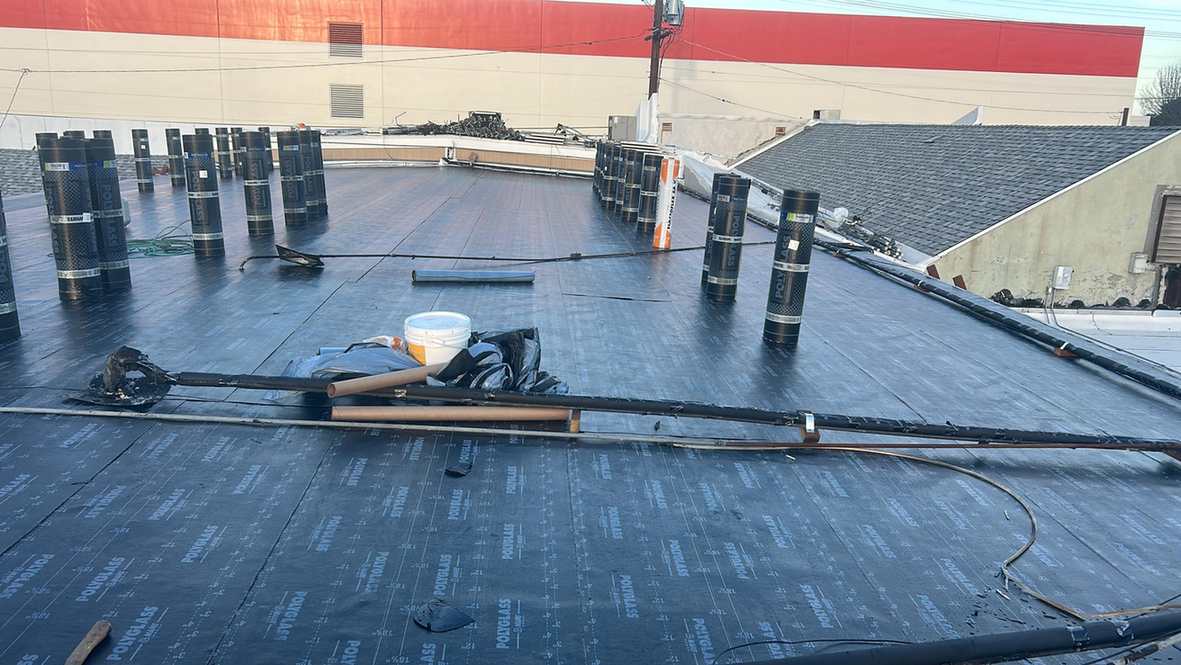
For low-slope roofs, we install TPO and torch-applied modified bitumen, which is asphalt-based sheet roofing. Modified bitumen is our first choice where it suits the roof. For its top layer, called the cap sheet, we prefer reflective Polyglass Polyfresko G.
That cap sheet works as part of a compatible assembly, not as a whole roof by itself. TPO is a single-ply membrane with welded seams, and we install it when it fits the building. With either system, the full assembly and the edge details matter as much as the top surface.
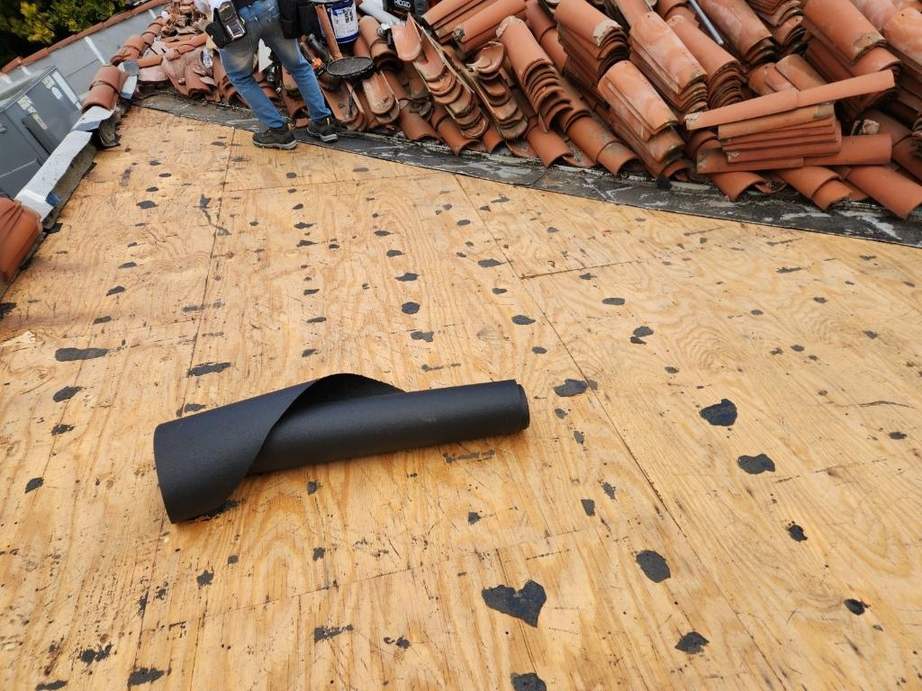
Pitched sections may call for asphalt shingles, metal or tile. On tile or slate, lift and relay may be an option. We lift the pieces, replace the underlayment and damaged decking, then relay them.
Our flat and low-slope roofing page explains the low-slope systems in more detail.
Planning Access, Tenants and City Inspections
An occupied building needs a plan for roof access, work zones and tenant notice before tear-off starts. If a permit calls for city inspections, plan for those visits too.
Each proposal should show where the crew will reach the roof and where materials will sit. It should also say who handles rooftop equipment and whether that work is in the price.
Name one contact for tenants and building staff. Share the hours when noise or a blocked entrance would cause the most trouble. Expect some disruption near the work zone, and plan parking, deliveries and entrances around it.
Find out how the crew will cover open roof areas each night and before rain.
When your project needs a permit, we can help you pull it from the city that issues it. If the permit calls for city inspections, keep roof access open for the inspector. Build those visits into the schedule, since approval and timing rest with the city.
Tear-Off Debris and Closeout Records
Your proposal should say who removes tear-off debris, how it leaves the site and where it goes. A blank line here leaves you guessing once the old roof comes off. When the job ends, keep the closeout records that show what was done.
Within the City of Los Angeles, you can check a named hauler against the city's permitted-hauler list. A listing is not an endorsement. It also does not prove that a facility will take a given load.
The facility that receives the debris decides what it accepts. If you get records, keep the hauler name, job site, date, weight, material type and any rejected load. Our guide on what to ask about debris removal before a commercial reroof puts those questions in one place.
At closeout, keep the final scope, approved changes, permit records and warranty papers in one file. That file helps whoever manages the roof next.
Comparing Proposals and Warranty Terms
Compare proposals by scope first and price second. Line up the roof areas, removal method, deck allowance, assembly layers, flashing, debris plan and exclusions. Our owner worksheet for comparing commercial roof proposals gives you a place to record each one.
Put any promise that matters, such as the schedule or cleanup, in writing. Warranties need the same side-by-side check. Ours is a ten-year workmanship warranty, and it applies only to full roof replacements.
Any manufacturer warranty on the materials has its own terms. It is a separate document from ours. Check each warranty for what it covers, how long it runs and who you contact about a problem.
Questions About Replacement Estimates and Warranty
Is roof age enough reason to replace a commercial roof?
No, age alone does not decide it. Consider replacement when leaks keep coming back or repairs pile up, and weigh how far the damage spreads.
How much does it cost to replace a commercial roof?
A replacement price depends on the scope of work, so there is no single figure. Roof area, whether the old roof comes off and any hidden deck damage all affect the total. So do the new roof layers, flashing details, rooftop equipment, access and debris removal.
What warranty comes with a full roof replacement?
We give a ten-year workmanship warranty on a full roof replacement. It does not extend to repairs, and it stays separate from any manufacturer warranty on materials. Ask for the written terms before you sign.
Requesting a Commercial Roof Replacement Estimate
Call (424) 842-2249 or request your free replacement estimate online. If you also need a written report, ask for it as a separate paid service.
Tell us the property address, the roof type if you know it and the problems you see. Mention any tenant access limits and any drawings you already have.
Planning a new building instead? Our commercial roof installation service works from the plans your general contractor supplies. You can also check our service areas for the cities we cover.
Commercial Roofing Los Angeles is a division of Home Vision Remodel. We work under CSLB #1112525.
Commercial Roofing Los Angeles
Los Angeles CA
(424) 842-2249