Flat Roofing in Los Angeles, CA
We repair, replace and install flat roofs on commercial buildings across Los Angeles. Our main flat-roof system is torch-down modified bitumen, and we also install TPO. A good choice starts with the roof you have now and how it drains.
A roof that looks flat is still a stack of layers, seams and edges that must work together. Call (424) 842-2249 for a free estimate, and ask which system fits your building and why.
What low-slope roof is on your building now?
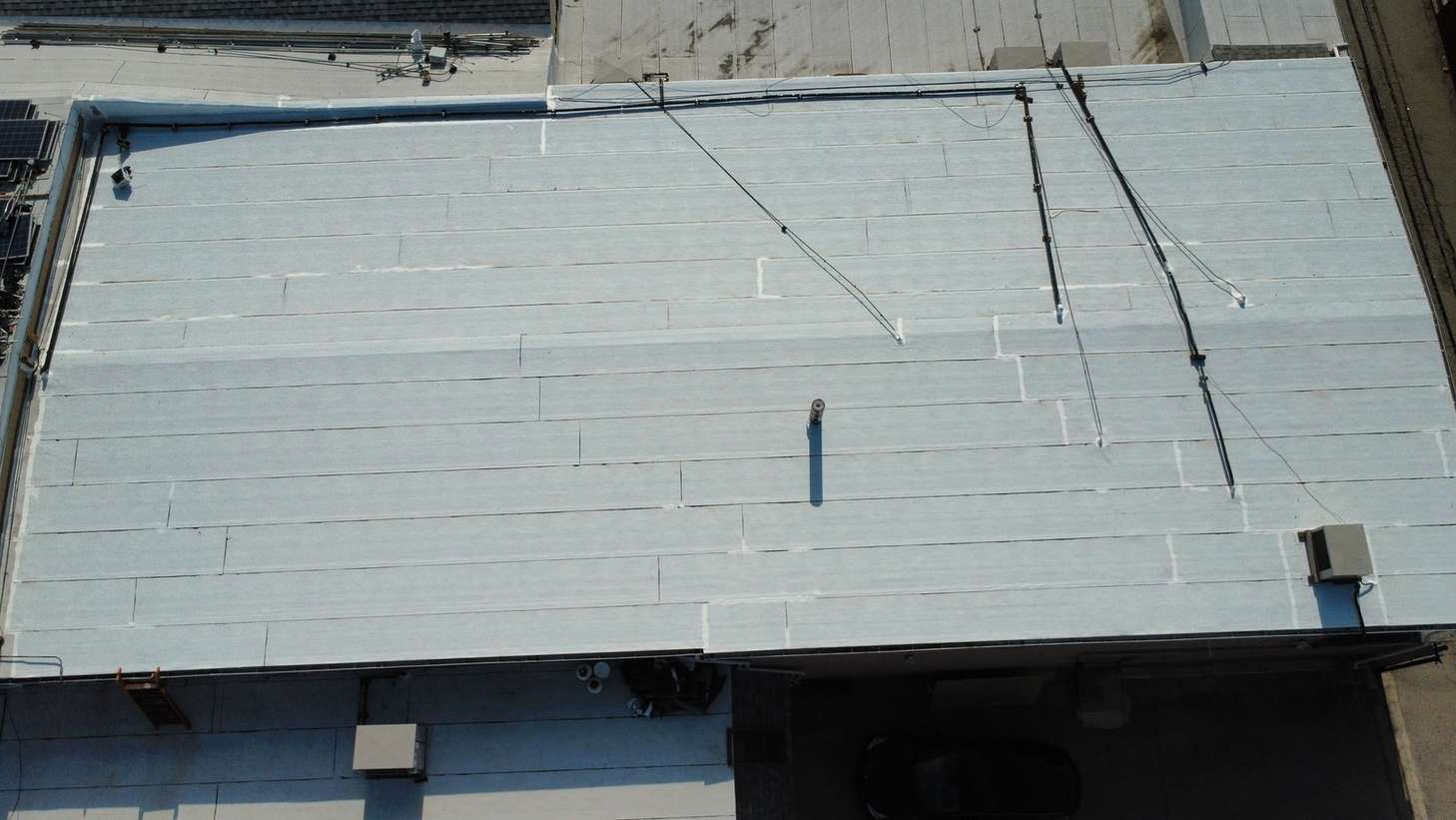
Start by naming the system already on the roof. Roofers often call flat roofing low-slope roofing, since a roof that looks flat still has to drain. The system in place now shapes every choice that follows.
Don't guess the roofing material from the ground or from an old invoice alone. A roof can hide an older layer underneath, or patches of a different product from past repairs. Share any information you have, and we will use it as a guide when recommending repair or replacement.
Past repair invoices, old proposals and warranty papers can name the system and its installer. They may also show how many layers sit on the roof deck, the structural surface under all the roofing.
This history matters for every route, since a repair must bond with, or tie into, the material already there. A replacement plan has to say whether the old layers come off first.
Modified bitumen or TPO for your flat roof
Either system can work on a flat roof, and we install both. We prefer modified bitumen when it suits the roof. We install TPO when it fits better or when the project calls for it.
The existing roof, its details and your plans for the building guide the choice. Neither system is right for every building.
Modified-bitumen assembly
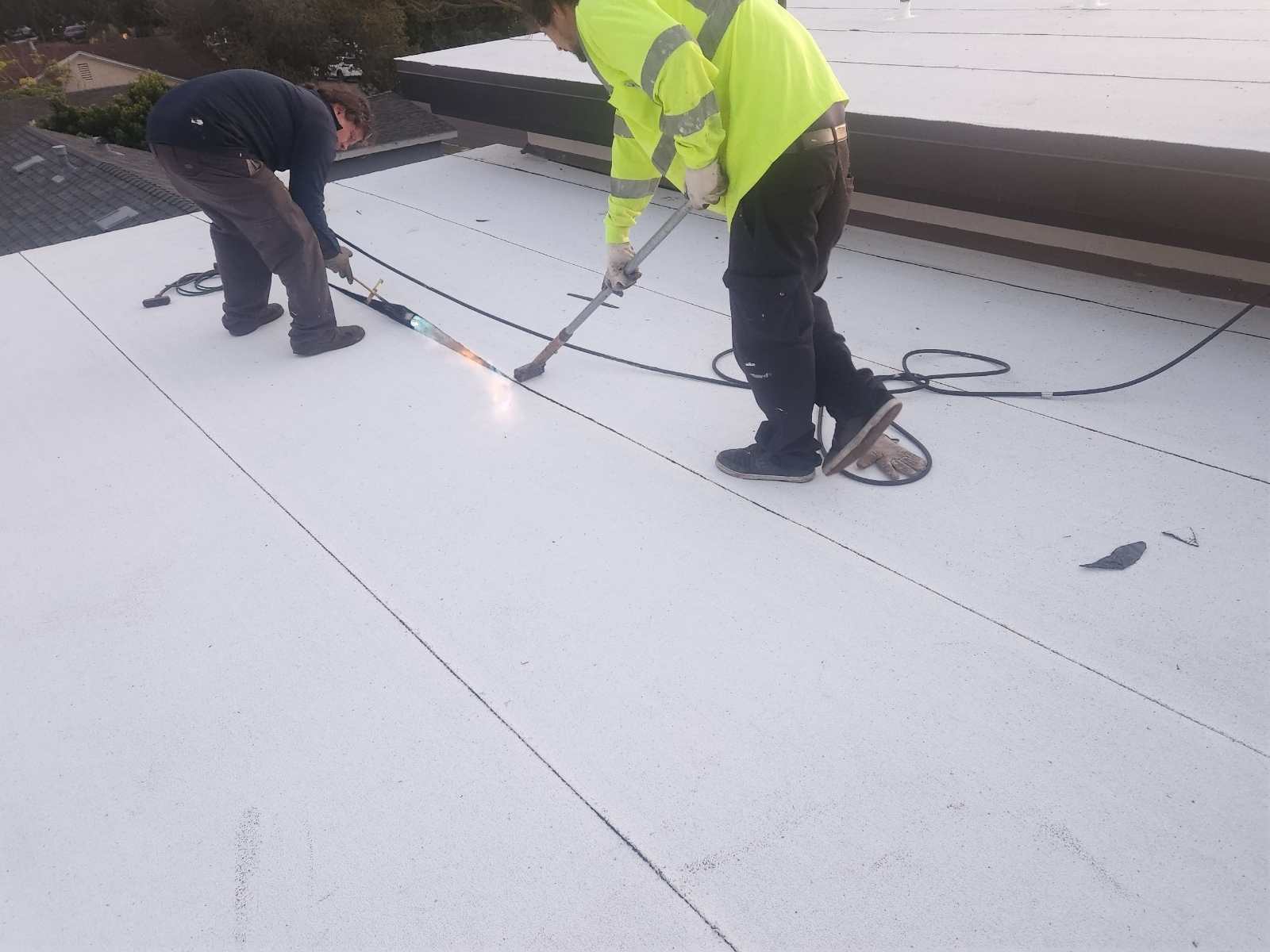
Modified bitumen is an asphalt roofing sheet that contains plastic or rubber modifiers. In a torch-down system, the crew heats each sheet so it bonds to the layer below. The same heat fuses the overlaps between sheets.
The cap sheet is the finished top layer you see from above. Our preferred cap sheet is Polyfresko G, a reflective APP sheet with a granule surface. APP is a plastic-modified type of modified bitumen.
Polyglass lists Polyfresko G for direct use on an acceptable surface or over approved base sheets. Either way, your written proposal should identify the compatible assembly and every layer beneath the cap sheet. Our page on torch-down modified bitumen explains the system in more depth.
TPO membrane assembly
TPO is a single-ply membrane, so one main sheet forms the waterproof surface. Installers heat-weld the seams where sheets overlap. The welds, the edge details and the way crews attach the sheet all affect how the roof holds up.
When project plans specify TPO, we install it and can explain where modified bitumen may suit the same roof. You can read more about TPO roofing before you decide.
The layers and details under the top sheet
A flat roof keeps water out only when every layer and detail works together. The top sheet is just one of them.
- Deck. The deck carries the whole roof. Damaged decking needs repair before new layers go on.
- Insulation. Some assemblies include insulation boards between the deck and the membrane. On a replacement, the plan should say whether those boards stay or come out.
- Seams. Seams are the joints where sheets overlap. Torch-down crews fuse modified bitumen seams with heat, and TPO installers weld theirs.
- Edges and walls. The roof edge and any parapet walls need their own details. A parapet is the short wall that rises above the roof line.
- Openings. Drains, pipes, vents and equipment curbs all pass through the roof. A curb is the raised frame that holds a rooftop unit.
Each opening and wall needs flashing, the material that seals the roof where it meets another surface. Flashing is a common starting point for leaks. A sound proposal names these details instead of pricing the open roof alone.
Standing water, past leaks and roof changes
Standing water, past leaks and later changes all help show what work a roof needs. Before your estimate, gather what you can on these points:
- Have you seen water sitting on the roof long after rain stops?
- Where have leaks shown up inside, and after what kind of weather?
- When was the last repair or roof job, and what did it cover?
- Has anyone added rooftop equipment, vents or other openings since then?
- Do you have dated photos of stains, drips or roof damage?
You can collect most of this from records, tenants and staff, and from inside the building. A simple log of each leak's date, location and weather makes patterns easier to spot.
That history can point to whether a problem is isolated or spreading, and whether the job needs further assessment.
Repair, replacement or a new flat roof
The right route depends on the extent of flat-roof damage and whether the building is new construction. Problems confined to one area usually call for repair, while repeat leaks or widespread wear point to replacement. A new building needs a new installation, since there is no existing roof to repair or replace.
- Repair fits a problem in one defined area, such as an open seam or failed flashing. Commercial roof repair covers leak and damage work in more detail.
- Replacement fits a roof where leaks keep coming back or wear has spread across the surface. Commercial roof replacement covers removing the old roof and building a new assembly. Every full replacement comes with our ten-year workmanship warranty.
- New installation applies to new construction, and we install the roof from the plans your general contractor supplies. Commercial roof installation explains that work.
If you're unsure which route fits, call (424) 842-2249 for a free estimate or use our form.
How to read a flat-roof proposal
A clear proposal names the full assembly, lists the details it covers and states what it leaves out. Check these points before you sign:
- The system and each layer by name, from the deck up
- Whether the old roof comes off, and how the price handles damaged decking the crew finds during removal
- Which details it covers, such as edges, parapet walls, drains, pipes, vents and curbs
- What the job excludes, in writing
- Whether the job includes help pulling the required roofing permit
- The warranty terms and the work they cover
When your city requires a roofing permit for the project, we can help you pull it.
A spoken promise about how long a roof will last is not the same as written terms. Ask for every promise that matters to you in writing, and hold our proposal to the same list.
Flat roof cost, report and warranty questions
How much should a flat roof cost?
The cost depends on roof area, current condition and the assembly we specify. Removal of old layers, roof access and the rest of the scope also affect the quote. Call for a free estimate on your roofing work; we price a detailed written report separately.
What are the disadvantages of a flat roof?
With little slope, a flat roof relies on sound drainage and well-sealed details. Water that stays long after rain can signal a drainage problem, and flashing is a common leak source. How much either matters depends on the roof's condition and the system in place.
What warranty comes with a full roof replacement?
We give a ten-year workmanship warranty on full roof replacements. It applies to full replacements, not repairs, and it is not a manufacturer's product warranty. Ask for the written terms with your proposal.
Get a free estimate for your flat roof
Call (424) 842-2249 for a free estimate on flat-roof repair, replacement or new installation. Have the property address and a short description of the problem ready. You can also describe the leak or project through our contact form.
Flat roofs are one part of the commercial roofing in Los Angeles that we handle. Our service areas page lists the places we cover.
Commercial Roofing Los Angeles is a division of Home Vision Remodel. Our contractor license number is CSLB #1112525.
Commercial Roofing Los Angeles
Los Angeles CA
(424) 842-2249