Torch-Down Roofing in Los Angeles, CA
Torch-down roofing is a modified-bitumen system built for flat and low-slope roofs. The installer heat-welds the torch-applied membrane, and the same heat seals the seams where sheets overlap. The written specs set whether other layers go below it and how they attach.
We repair, replace and install torch-down roofs on commercial buildings across Los Angeles. It is our preferred low-slope system, though the deck, the existing layers and the roof details decide the fit. Call (424) 842-2249 for a free estimate on a torch-down repair, replacement or new installation.
Where modified-bitumen roofing fits
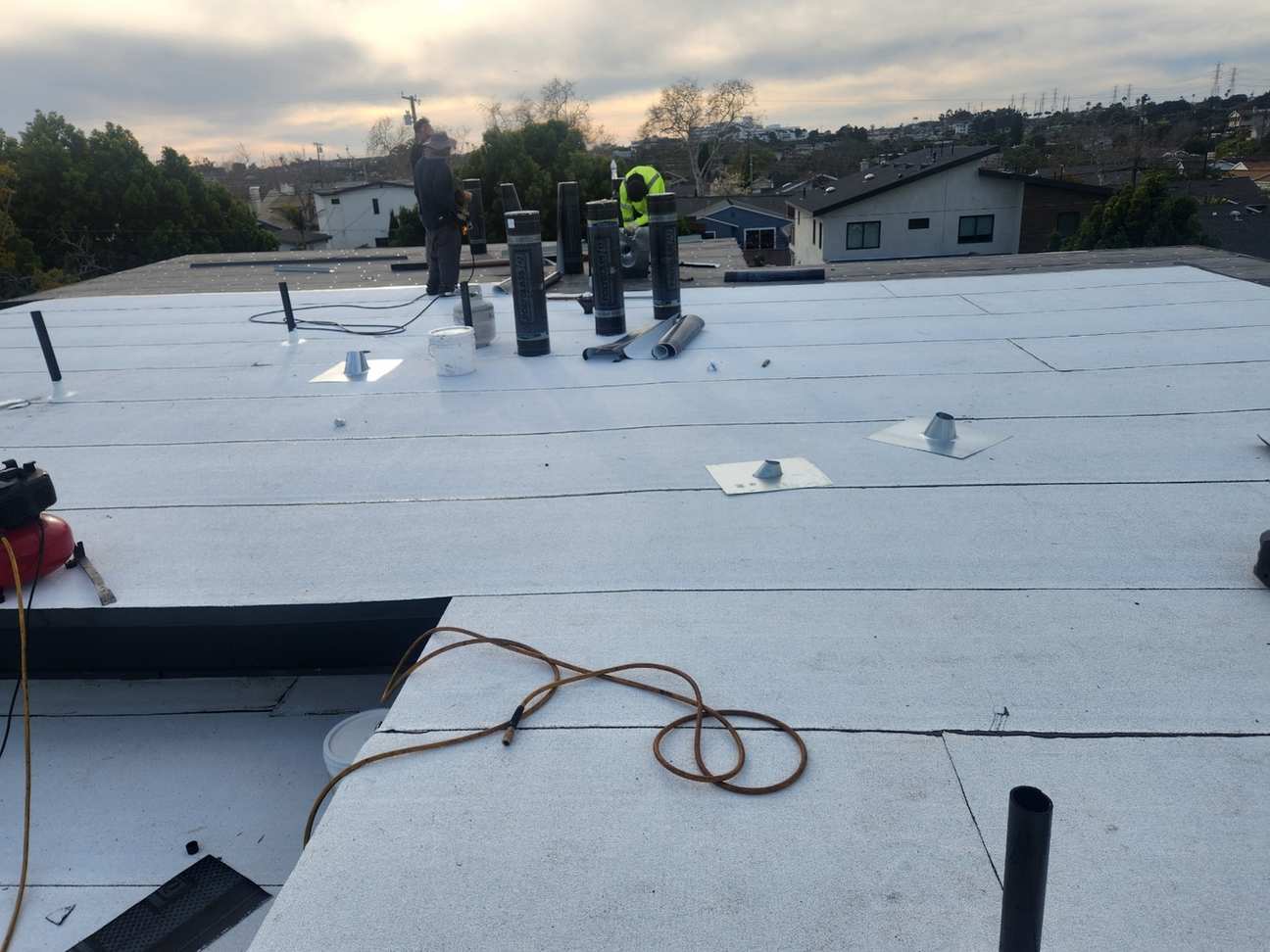
Modified bitumen suits many flat and low-slope commercial roofs, including multi-unit and property-managed buildings. The fit is still a decision we make for each roof, not a default. We base it on the deck, the old layers, drainage, roof details and site limits.
- Deck condition: whether the structural surface under the roof is sound or needs repair first.
- Existing layers: how many old roof layers are in place and whether any of them can stay.
- Drainage: how water moves toward drains and roof edges, and where it sits after rain.
- Roof details: how many walls, curbs and pipes break up the surface and need sealing.
- Site limits: occupied spaces, nearby openings and rooftop equipment that affect how torch work can proceed.
Some roofs suit another low-slope system better, such as TPO, which we also install. Torch-down is one part of our commercial roofing in Los Angeles, so we can compare both for your roof.
What a torch-down roof assembly includes
A torch-down roof is a set of layers that work as one system, not a single sheet. That system has the cap sheet on top, plus any compatible base layers below. It also includes the flashing at the walls, edges, drains, curbs and pipes.
Cap sheet versus the whole system
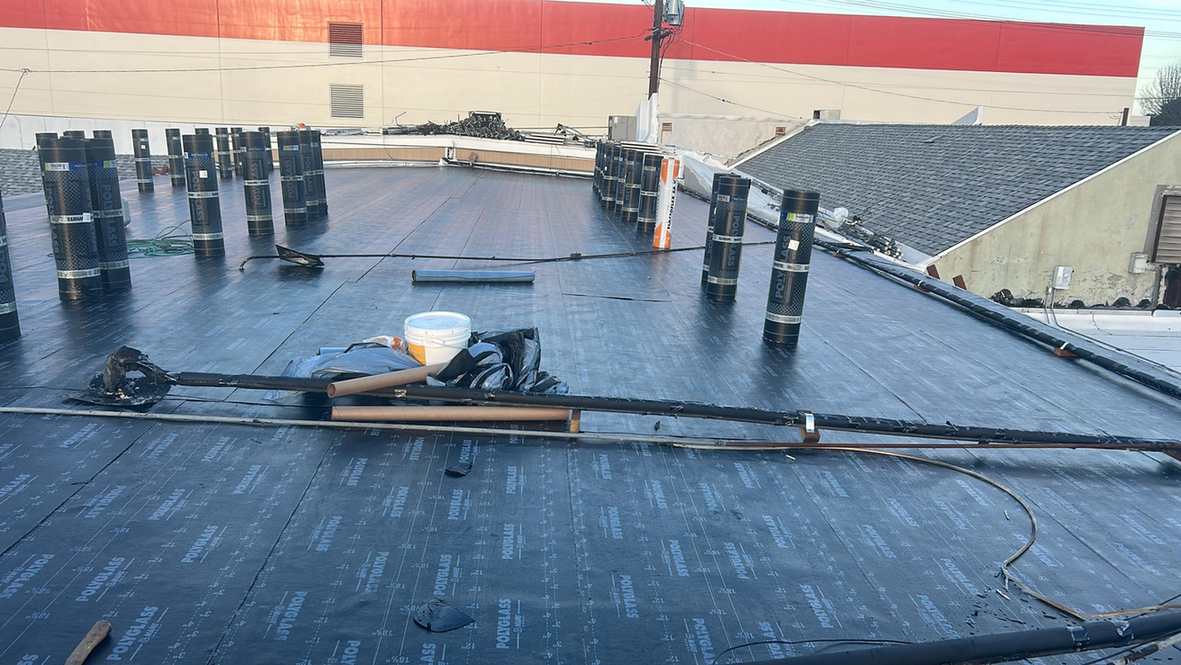
The cap sheet is the exposed top layer, the part you see from above. Our preferred cap sheet is Polyfresko G from Polyglass. It is a reflective APP cap sheet with a granule surface, and APP is one type of modified bitumen.
Polyglass lists Polyfresko G for use within a compatible roof assembly, so the layers under it matter. Beneath the cap sheet, the written specification sets any base layers that pair with it. It also says how they attach to the substrate, meaning the deck or prepared surface under the new roof.
A proposal that names only the cap sheet leaves the rest of the assembly undefined.
Transitions, edges and penetrations
Transitions are the places where the roof meets a wall, an edge, a drain, a curb or a pipe. Leaks on low-slope roofs often start at these points. A complete torch-down scope names each one on your roof, from walls to pipes.
- Walls: parapets, the short walls that rise above the roof edge, plus other roof-to-wall joints.
- Edges: the perimeter of the roof and the trim that finishes it.
- Drainage points: roof drains and the edge openings that let water leave the roof.
- Curbs: the raised frames that hold rooftop equipment above the roof surface.
- Penetrations: pipes, vents and anything else that passes through the roof.
Flashing is the material that seals each of these points. Depending on the detail, it may be membrane, metal or a combination of both. The written scope should list the details it covers and the flashing material for each one.
Repairing or replacing an existing torch-down roof
Whether a roof needs repair or replacement depends on its condition, not on a fixed rule. A leak at one flashing detail may need only a targeted fix. Problems across large areas, or water trapped between layers, raise the question of full replacement.
Our commercial roof repair work covers leaks and flashing problems on existing roofs. If water is already coming in, call (424) 842-2249 to describe the leak and arrange a repair estimate.
Replacement raises its own questions about what stays and what comes off. How many layers are already on the roof, and can any of them remain in place? Or should the roof come off down to the deck, which roofers call a tear-off?
Adding a new roof over the old one is not automatic. The number of existing layers and their condition shape that choice. Our commercial roof replacement scope starts with that removal decision.
Some deck damage stays hidden until the old layers come off. Repairs to that damage are a common source of change orders on replacement jobs.
Planning a professional torch-down installation
Torch-applied roofing uses an open flame, so it belongs with a professional roofing crew rather than a do-it-yourself project. The job plan should address roof access, the people inside and protection for nearby openings. It should also spell out how the torch is controlled and what checks follow the work.
Before work starts on your building, get clear answers on these points.
- Access: how the crew and materials reach the roof, and which entrances, parking or loading areas they need.
- Occupants: what tenants, staff or visitors should know about the schedule and any areas they cannot use.
- Protected zones: which nearby openings, air intakes and burnable materials need protection while torch work is underway.
- Torch controls: how the crew manages the torch on your roof and what checks follow each day's torch work.
- Rooftop equipment: which units need protection or coordination with other trades during the roof work.
For new buildings, commercial roof installation starts from the plans a general contractor supplies. If the project needs a roofing permit, we help you pull it from the issuing city or agency.
Questions to put in a torch-down proposal
Compare written proposals on what each one includes, what it leaves out and what it promises. Each should name the cap sheet, any base layers, what comes off and which details get flashing. Then check how hidden deck damage is priced and which workmanship warranty applies.
These questions help you line up the answers side by side.
- Which cap sheet and base layers does the price include, by product name?
- Does the old roof come off, and if so, down to which layer or to the deck?
- Which walls, curbs, drains, edges and penetrations does the scope cover, and with what flashing?
- How does the proposal price deck repair if hidden damage turns up during tear-off?
- What workmanship warranty applies, for how many years, and to which part of the work?
- What does the proposal exclude, such as work on rooftop equipment by other trades?
If a proposal promises specific cooling or fire results, ask for the written product data behind that promise. Our full roof replacements carry a ten-year workmanship warranty, and the written contract sets its terms.
Torch-down roofing cost, report and warranty questions
How much does it cost to torch down a roof?
Roof size, roof condition and the specified layers all shape the price. Removing old layers, roof access and the number of details in scope change it too. Our estimate for the roofing work is free, while a detailed written inspection report is a separate paid service.
What are the downsides of torch-down roofing?
Torch-down uses an open flame, so it calls for a professional crew and a careful site plan. Nearby openings, air intakes and anything that can burn need protection, and occupied spaces can limit torch work. Some roofs suit TPO better, and we install both systems.
What warranty applies to a full replacement?
A full roof replacement comes with our ten-year workmanship warranty. It applies to our workmanship on full replacements, not to repairs, and it is not a manufacturer's product warranty. Your written contract sets the exact terms, so read them before you sign.
Requesting a torch-down roofing estimate
Start by naming the task you need: a repair, a replacement or a new installation from plans. Have the property address ready, since that is the first detail we ask for. We may also ask for photos of the problem areas later.
We work on commercial roofs across Los Angeles and in nearby cities. Our service areas page lists the places we cover.
Call (424) 842-2249 for a free estimate, or send your roof project details through our contact page.
Commercial Roofing Los Angeles is a division of Home Vision Remodel. Our contractor license is CSLB #1112525.
Commercial Roofing Los Angeles
Los Angeles CA
(424) 842-2249