
Commercial Tile Roofing in Los Angeles, CA
A leak on a tile roof can start with a cracked or slipped tile. It can also start under the tiles, in the underlayment or flashing that keeps water out. We handle repair, lift-and-relay, replacement and installation on commercial and multi-unit tile roofs around Los Angeles.
The right scope depends on which layer is failing and how much old tile we can reuse. Call (424) 842-2249 to describe the leak or the planned tile work and request a free estimate. You can also send the details with the form on this page.
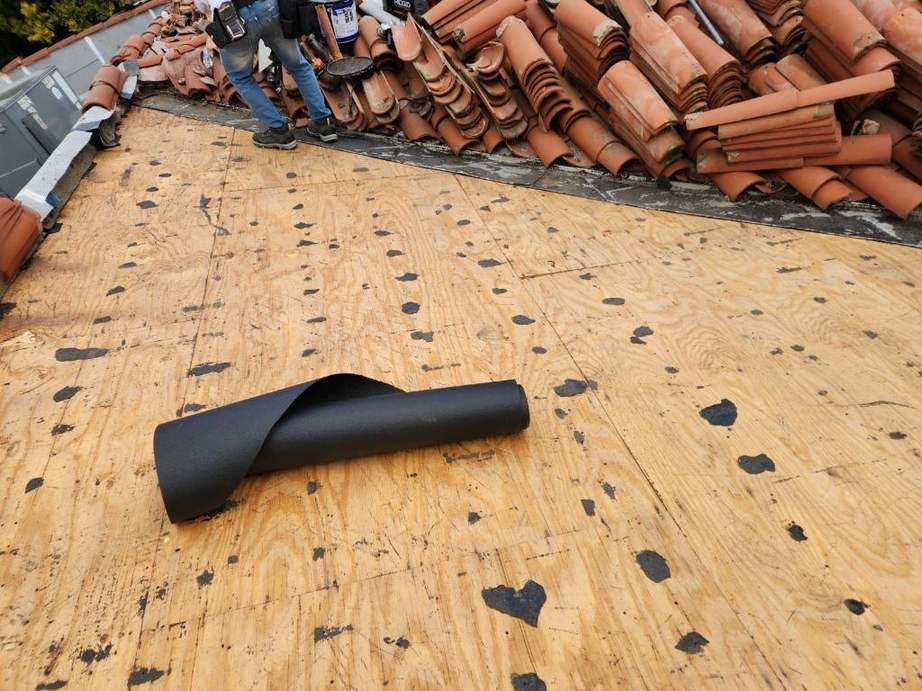
How we assess an existing commercial tile roof
We start by separating damage to the tiles from problems in the layers below them. Broken, cracked, slipped or missing tiles are often easy to spot. Worn underlayment or failed flashing at a wall or vent usually sits out of sight.
That difference changes the job. Swapping a few tiles fixes breakage, but it does not fix worn underlayment or leaking flashing. Water may also enter the roof some distance from the stain a tenant reports.
Tell us which units or rooms show water and whether it appears during or after rain. That detail helps us trace the source. For leaks on flat or low-slope parts of the same building, see our commercial roof repair page.
What tiles, underlayment and flashing each do
A tile roof has separate parts, and each one does its own job:
- Tiles form the outer layer you can see.
- Underlayment is the water-resistant layer between the tiles and the roof deck.
- Flashing seals valleys and the joints where the roof meets walls, vents and other openings.
- Fastening holds the tiles in place.
The Tile Roofing Industry Alliance's roof tile installation manual gives general guidance on underlayment, flashing and fastening.
Because the parts are separate, one can wear out while the others stay sound. Solid tile can sit on top of underlayment that no longer protects the deck. A useful proposal names each part and says what work each one gets.
When lift-and-relay makes sense for tile
Lift-and-relay fits a roof where the underlayment has failed but much of the tile is still sound. We lift the tile, replace the underlayment, repair damaged decking and relay the sound original tile. Decking is the layer of boards under the roof covering.
Three conditions decide whether it suits your roof:
- Tile condition: older tiles may already have cracks or brittle edges.
- Breakage: tiles can break as they come off, so the scope needs a plan for replacements.
- Matching: new tiles may differ from the originals in color, finish or shape.
The exact share of reusable tile only becomes clear once the work starts. Replacement tile may not match exactly, so ask where any new tiles would sit. Hidden decking damage may show once the old underlayment is off, so check how the proposal prices it.
Call (424) 842-2249 for a free estimate on a tile repair or lift-and-relay.
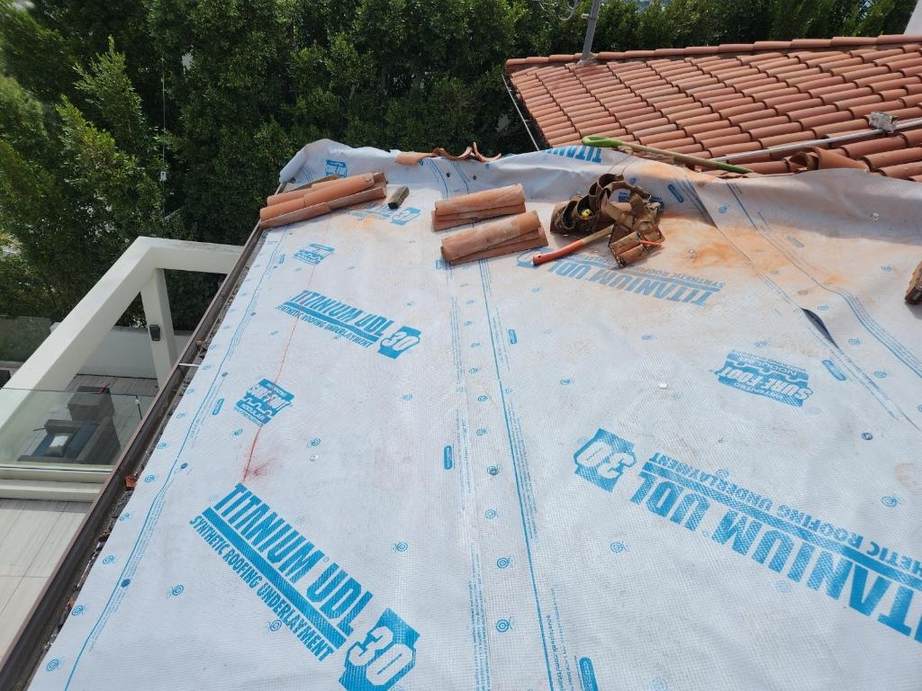
Replacing or installing a commercial tile roof
Full replacement fits when the tile itself is failing across the roof or too little is reusable. On an existing building, the work starts by removing the old tile and underlayment down to the deck. As with any full commercial roof replacement from us, a full tile replacement includes a ten-year workmanship warranty.
For a new building, our commercial roof installation work follows the plans your general contractor or design team supplies. Tile must suit the structure beneath it, so the project's plans or engineer should confirm that fit first. That check matters most when a building has never carried tile.
If the job needs a roofing permit, we help you pull it from the issuing city or agency.
What to ask before you approve a tile roof proposal
Ask what the proposal includes, what it leaves out and what it promises in writing. Use these questions to check a tile scope:
- Does the job reuse old tile, add new tile or do both?
- How will the work handle tiles that break?
- Which underlayment goes on, and on which roof areas?
- Which flashing will the crew replace, repair or leave in place?
- How does the proposal price decking damage that shows up after removal?
- Which items stay uncertain until the old layers come off?
- Which warranty applies, if any, and where do the terms appear?
If a promise matters to you, make sure the written proposal states it.
Tile roof cost, report and warranty questions
How much does a tile roof cost in California?
A tile roof has no set price, because the scope changes from one roof to the next. The quote depends on roof area, current condition, the materials specified, how much tile comes off and roof access. We give a free estimate for the roofing work, and a detailed written report is a separate paid service.
What are the disadvantages of tile roofs?
Worn underlayment and failed flashing usually sit out of sight, so a sound-looking tile roof can still leak. Older tiles may have cracks or brittle edges, and some can break as crews lift them. New tiles may also differ from the originals in color, finish or shape.
What warranty applies to a full tile roof replacement?
A full tile roof replacement from us includes a ten-year workmanship warranty. The warranty does not extend to repairs, and it is not a manufacturer's material warranty. Ask for the written terms with your proposal.
Request a free estimate for commercial tile work
For a free estimate, call (424) 842-2249 and describe the leak, the tile condition or the planned installation. Our contact page also lets you send details of the tile roof project.
Tile is one part of our commercial roofing in Los Angeles, which also covers flat and low-slope systems. See our service areas page for the places we cover.
Commercial Roofing Los Angeles is a division of Home Vision Remodel. Our roofing contracts carry CSLB #1112525.
Commercial Roofing Los Angeles
Los Angeles CA
(424) 842-2249